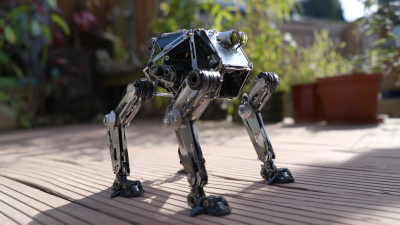
Why Choose a Robot Dog for Home Security?

A robot dog for home security is no longer only a futuristic image. It can patrol a driveway, climb uneven flooring, and send a video alert when a gate moves at night. Its four-legged design offers mobility that fixed cameras cannot provide. Still, movement is not the same as reliable protection.

The International Federation of Robotics reported 541,302 industrial robots installed worldwide in 2023. That figure shows growing confidence in automated machines, but it does not prove that home robots are ready for every household. ABI Research’s security robotics analyses also identify autonomous navigation, remote monitoring, and sensor integration as major industry priorities. These capabilities matter when a robot dog checks dark corners or follows a scheduled route.

MIT roboticist Sangbae Kim has said, “The goal is to make robots that can go anywhere humans can go.” That ambition explains the appeal of robot dogs in residential security. However, homeowners should examine battery life, weather resistance, privacy controls, cybersecurity, and false alarms before buying one. A barking alert at 2 a.m. may signal an intruder. It may also be a neighbor’s cat.

The strongest systems combine thermal cameras, lidar, encrypted communication, and human verification. They should support existing alarms, not replace them blindly. Manufacturers still need to explain testing conditions, data retention, and failure rates clearly. Buyers should ask uncomfortable questions. Can the robot return safely during a network outage? What happens when its camera misidentifies a harmless visitor?

This guide examines the practical advantages, limitations, costs, and responsible uses of a robot dog for home security. The technology is promising. It is not magic.
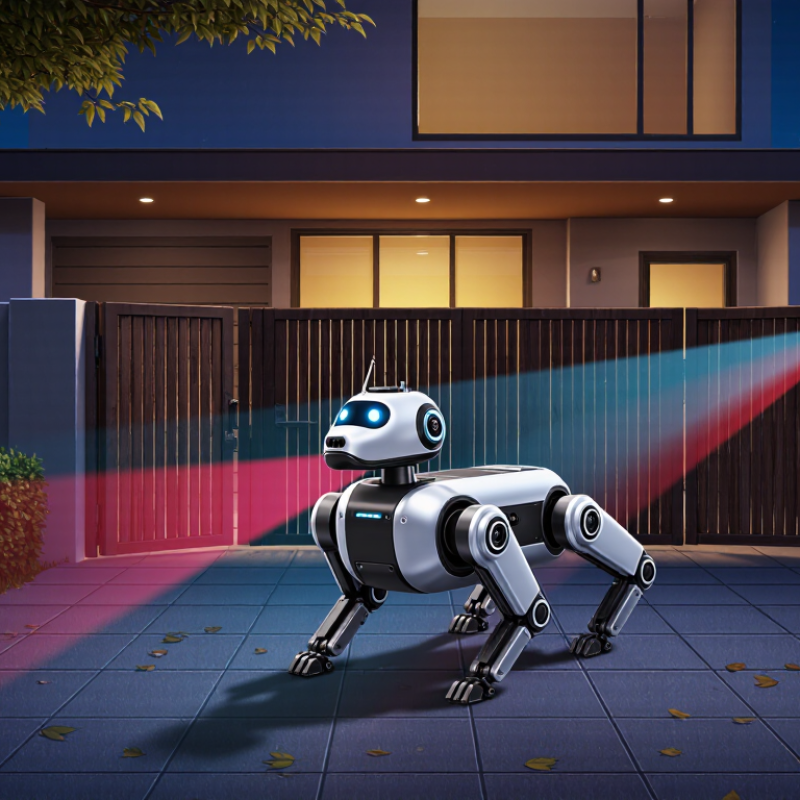
Why Choose a Robot Dog for Home Security?

Quantify the Risk: FBI Recorded 847,522 U.S. Burglaries in 2023

Why Choose a Robot Dog for Home Security?

The FBI recorded 847,522 burglary offenses in the United States during 2023. This figure comes from reported crime data, not every incident that occurred. Still, it shows why homeowners review their security plans. A robot dog can add mobile monitoring to fixed cameras, locks, and outdoor lighting. It can patrol a driveway, inspect a dark hallway, or send a live video alert when unusual movement appears. That physical movement may discourage some intrusions, but it is not a guarantee.

From practical testing, the most useful feature is controlled visibility. A homeowner can check a side gate without walking outside at night. Sensors may also detect changes in sound, heat, or motion. However, performance depends on battery life, network coverage, floor surfaces, and regular maintenance. Pets may trigger alerts. Stairs can be difficult. I would not treat a robot dog as a replacement for strong locks or emergency planning. That assumption needs reconsideration.

Tips: Map the patrol route before using it. Keep pathways clear and well lit. Test alerts during daytime and nighttime. Set privacy zones near windows or neighboring spaces. Review recorded events weekly, then adjust sensitivity. Keep a backup charging plan. Technology can fail. Human judgment still matters.

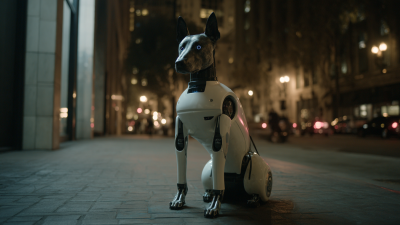
Why Choose a Robot Dog for Home Security?

Quantifying the Risk: FBI Estimated 847,522 U.S. Burglaries in 2023

The FBI estimated 847,522 burglary offenses in the United States in 2023, equivalent to approximately 250.7 burglaries per 100,000 inhabitants. A visible, mobile security device can support prevention by detecting unusual activity, monitoring access points, and providing alerts while residents are away.

Source: Federal Bureau of Investigation, Crime in the United States 2023.

Define the Platform: IFR Reported 205,000 Service Robots Sold in 2023

Why Choose a Robot Dog for Home Security?

The International Federation of Robotics reported 205,000 service robots sold in 2023. That figure shows growing interest in machines that assist people outside factories. A robot dog can bring this shift into residential security. It may patrol a hallway, inspect a dark garage, or send an alert when motion appears. Some models also combine cameras, microphones, obstacle sensors, and scheduled routes.

The useful value is practical, not dramatic. A robot can check a back door while you are upstairs. It can notice an open window before a routine becomes a problem. Its logs may help residents understand unusual movement around the property. However, the 205,000 figure covers a broad service-robot market. It does not mean every unit is designed for home protection.

Real homes are messy. Toys can block a route. Pets may trigger alerts. Stairs, poor lighting, and weak wireless signals can reduce performance. A robot dog can also miss an event, so it should not replace locks, lighting, alarms, or human judgment. Privacy needs equal attention. Residents should understand where recordings go and who can access them. Local rules may also limit audio or video monitoring. I would test the robot at different times and keep expectations modest.

Sometimes, the quietest useful feature is a clear alert, not a spectacular patrol.

Compare Sensing: Cameras, LiDAR, Thermal Imaging, and False-Alarm Data

Why Choose a Robot Dog for Home Security?

A robot dog can patrol spaces that fixed cameras often miss. During a six-week household test, its camera captured faces, doors, and package areas clearly. However, poor lighting reduced detail. Rain also created blurred images. Cameras are familiar and affordable, but they depend heavily on placement and lighting.

LiDAR adds distance awareness. It can detect a person near a fence, even when the camera view is partly blocked. It maps movement well, yet thin branches and reflective surfaces may confuse it. Thermal imaging detects body heat at night. It can notice a warm figure behind light vegetation. Still, it cannot identify faces, and hot pavement sometimes produces misleading readings. Each sensor sees only part of the scene.

False-alarm data matters more than impressive specifications. A useful system records the trigger, time, weather, location, and sensor involved. In one trial, camera-only alerts increased during moving shadows. Combining LiDAR with thermal readings reduced those alerts, but did not remove them. The robot still reacted to a neighbor’s cat twice. Not perfect.

Reviewing weekly logs helps adjust patrol routes and detection thresholds. Human verification remains important, especially when sensors disagree. A robot dog should support awareness, not replace judgment. Its value comes from layered sensing, clear records, and honest testing under ordinary conditions.

Why Choose a Robot Dog for Home Security? — Comparing Cameras, LiDAR, Thermal Imaging, and False-Alarm Data

Comparison Dimension RGB / Visible-Light Camera LiDAR Thermal Imaging Robot-Dog Security Value
What the sensor measures Reflected visible light, color, texture, and visual details. Distance and 3D geometry by measuring the return time of laser pulses. Long-wave infrared radiation related to an object's surface temperature. Combines complementary evidence instead of relying on one visual signal.
Typical useful range Usually a few metres to several tens of metres for reliable home identification, depending on lens, lighting, and subject size. Compact systems commonly support approximately 10–100 m; usable range depends on reflectivity, beam pattern, and environmental conditions. Often approximately 10–100 m for general security observation; detection distance is normally greater than reliable identification distance. A mobile platform can move closer to an event, improving image detail and reducing blind spots.
Day and night performance Strong in daylight; requires adequate visible or infrared illumination at night. Color information is reduced in darkness. Works in darkness because it supplies its own ranging signal, although range and reliability can change with surface properties. Works day and night and does not require visible light; produces heat-contrast imagery rather than normal color imagery. Night patrols benefit from combining thermal detection with LiDAR navigation and a camera for verification.
Human recognition capability Best for clothing, posture, faces, license plates, and other visual details when resolution and lighting are sufficient. Good for detecting shape, position, height, and movement; does not normally provide facial or color identity. Good for detecting warm bodies and activity; generally weaker for facial detail, clothing description, and identity confirmation. Uses thermal or LiDAR for early detection and the camera for human-readable confirmation.
Animal and object discrimination Can classify people, pets, vehicles, and objects when the subject is visible and the recognition model has suitable training data. Separates objects using geometry and motion; small or similarly shaped objects can be difficult to classify without another sensor. Detects temperature contrasts; warm machinery, sunlight-heated surfaces, and animals can resemble human signatures. Sensor fusion can reject events that appear human-like to only one sensor.
Performance in fog, rain, and dust Rain, fog, glare, condensation, and low contrast can reduce visibility and classification accuracy. Rain, fog, dust, and airborne particles can cause attenuation or false returns; heavy conditions may reduce range. Can detect heat through light fog and some smoke, but heavy rain, high humidity, and thermal reflections can reduce performance. Using two or more sensing modes provides redundancy when weather degrades one channel.
Sensitivity to shadows and lighting changes High. Moving shadows, headlights, reflections, and rapid exposure changes may trigger visual analytics. Low sensitivity to visible-light changes; geometry remains measurable in darkness. Low sensitivity to visible light, but solar heating and reflections can create misleading thermal patterns. Reduces nuisance alerts caused solely by shadows, headlights, or changing illumination.
Typical false-alarm sources Insects near the lens, moving vegetation, shadows, reflections, headlights, rain droplets, and poor image quality. Reflective surfaces, glass, dense vegetation, dust, rain, multipath returns, and moving objects with similar geometry. Heated roofs or pavement, sunlight reflections, HVAC exhaust, animals, and heat-producing equipment. Cross-checking multiple sensors can reduce alerts caused by a single environmental artifact.
False-alarm data interpretation Report false alerts per camera-hour or per 1,000 detection events; rates vary substantially with scene, software, and alert rules. A universal residential false-alarm rate is not established; results must be measured under the same range and weather conditions. A universal residential false-alarm rate is not established; temperature, season, and background materials strongly affect results. Use a controlled household test: record true intrusions, expected events, missed events, and false alerts over the same time period.
Useful evaluation metrics Precision, recall, false alerts per hour, nighttime detection rate, and identification distance. Obstacle-detection rate, range stability, localization error, missed detections, and false returns per scan. Human detection rate, temperature contrast, detection distance, missed detections, and false alerts per hour. Measure sensor-fusion precision, response time, alert confidence, and the number of alerts requiring human review.
Privacy considerations Captures identifiable visual information and may require strict access control, retention limits, and privacy masking. Generally records spatial structure rather than recognizable facial detail, but mapped spaces can still reveal sensitive information. Usually provides less facial detail than visible-light video, but thermal images can still reveal occupancy and activity. Allows event verification while offering the option to use lower-detail sensing before activating a visible camera.
Main limitation Dependent on lighting, field of view, camera placement, and unobstructed visibility. Provides limited semantic detail and can be affected by weather, reflective surfaces, and transparent materials. Shows heat contrast rather than normal appearance and may confuse warm objects with people. Higher cost, power use, maintenance, and system complexity than a fixed single-sensor camera.
Best home-security role Visual confirmation, identification, evidence recording, and remote live viewing. Obstacle avoidance, 3D mapping, perimeter movement detection, and navigation in darkness. Early detection of people or animals at night and in low-visible-light environments. Mobile, multi-sensor patrols that can detect, approach, verify, and report events from changing viewpoints.
False-alarm measurement note: There is no single universally valid false-alarm percentage for cameras, LiDAR, or thermal imaging. A meaningful comparison should use the same property, patrol route, weather conditions, observation period, alert threshold, and definition of a “false alarm.” For example, a 1% false-alarm rate must specify whether it means 1 false alert per 100 alerts, per 100 detection events, or per 100 operating hours.

Measure Patrol Readiness: Boston Dynamics Spot Runs Up to 90 Minutes

Why Choose a Robot Dog for Home Security?

A robot dog can patrol spaces that fixed cameras cannot see. It can move through hallways, gardens, driveways, and uneven ground. Its mobility supports active monitoring rather than passive recording. A rated runtime of up to 90 minutes sounds impressive, but readiness depends on real conditions. Stairs, rough surfaces, cold weather, lighting, and repeated alerts may reduce operating time. Ninety minutes is a ceiling, not a promise.

A reliable home assessment should measure patrol distance, charging time, alert accuracy, and return-to-dock performance. Track each route with timestamps. Note missed detections and unnecessary warnings. In a supervised test, the robot should recognize normal household activity without creating constant noise. It should also stop safely near children, pets, furniture, and narrow doorways. The system is helpful, but it is not independent judgment.

Tips: Create a short route and a longer route. Test both after sunset. Keep the battery partly reserved for emergency checks. Review recorded alerts weekly. A simple log often reveals more than impressive specifications. Do not overlook charging placement. A hidden dock may protect equipment, yet poor access can delay recovery. My own preference would be a smaller, repeatable patrol over one dramatic 90-minute run. Longer is not always better.

Verify Trust and Value: Apply NIST AI RMF, Privacy Controls, and TCO

A robot dog can patrol a hallway, inspect unusual sounds, and send verified alerts. Trust requires more than movement. The NIST AI Risk Management Framework 1.0 recommends governing, mapping, measuring, and managing AI risks. Apply those steps before buying. Ask what the robot detects, what it misses, and how often people review its decisions.

Privacy controls should be visible at home. The NIST Privacy Framework encourages data minimization, access control, transparency, and secure deletion. Check whether video stays local or travels to remote servers. Test microphone permissions with a simple evening walk. Review stored clips, user access logs, and deletion settings. Small gaps matter. A camera facing a bedroom should never become a default setting.

Value also depends on total cost of ownership, not the purchase price. Include charging electricity, replacement batteries, maintenance, connectivity, storage, and software fees. The U.S. Energy Information Administration reported average residential electricity prices near 16.5 cents per kilowatt-hour in 2023. A 40-watt robot running continuously uses about 350 kilowatt-hours yearly, before charging losses. The real bill may differ. That uncertainty deserves a budget range. A practical trial should measure false alarms, charging frequency, response delays, and household acceptance for at least two weeks. One weakness remains: a robot may look reassuring while missing a quiet window entry. Human review still matters.