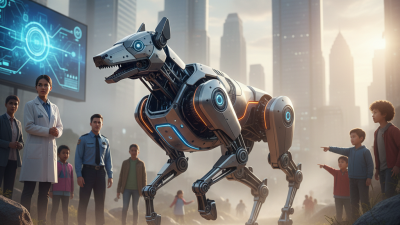
The 4 legged walking robot is moving from research laboratories into mines, factories, farms, and public safety operations. Its appeal is practical: four independently controlled legs can cross stairs, gravel, cables, and uneven concrete. A wheeled platform usually needs a prepared route. A quadruped can adapt its gait within seconds.
Industry data shows strong momentum, although the numbers require careful reading. The International Federation of Robotics reported 541,302 industrial robot installations worldwide in 2023, confirming broader automation demand. MarketsandMarkets’ Quadruped Robots Market research also projects double-digit growth through the forecast period. These reports do not measure exactly the same market. That matters. Some include research platforms, while others count commercial deployments only.
Marc Raibert, founder of Boston Dynamics, once said, “We’re interested in robots that can go anywhere people can go.” That ambition still shapes the sector. However, mobility alone does not guarantee value. Battery duration, payload limits, weather resistance, safety certification, and reliable autonomy remain difficult engineering problems. The best manufacturers are not simply building machines that walk. They are developing complete systems with sensors, software, remote control, maintenance support, and usable data.
This guide examines four leading 4 legged walking robot manufacturers worldwide. It compares their platforms, target industries, technical strengths, and commercial maturity. Some claims remain difficult to verify because suppliers disclose limited field data. That is an uncomfortable gap. A polished demonstration is not the same as dependable daily performance.
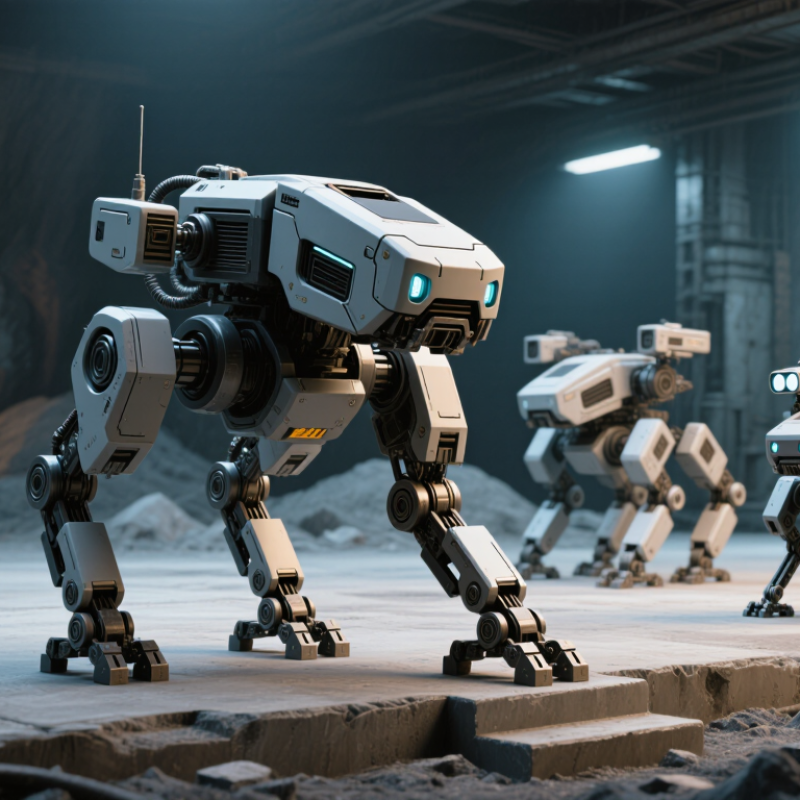
The global landscape of legged walking robot manufacturing is expanding from research laboratories into factories, inspection sites, and emergency-response training. Four leading manufacturer groups now shape the market: industrial automation specialists, defense contractors, mobile robotics companies, and university spin-offs. Their designs differ sharply. Some prioritize four-legged stability, while others develop humanoid platforms for human-centered workplaces.
MarketsandMarkets estimated the quadruped robot market at about USD 1.4 billion in 2023, with strong growth projected through 2028. Its analysis links demand to industrial inspection, security, logistics, and remote operation. Meanwhile, the International Federation of Robotics reported more than 4 million industrial robots operating worldwide in 2023. Legged systems remain a small segment, but they benefit from this mature automation ecosystem.
MarketsandMarkets estimated the quadruped robot market at about USD 1.4 billion in 2023
More than 4 million industrial robots were operating worldwide in 2023.
Manufacturing leadership is increasingly regional. North American producers emphasize field mobility and software integration. European teams often focus on safety, inspection, and collaborative operation. Asian manufacturers are scaling components, batteries, and precision actuators more aggressively. IDTechEx reports that falling sensor and computing costs are improving commercial viability, although battery endurance remains a practical limitation. A robot may cross uneven flooring smoothly, yet still require frequent charging after a demanding shift.
The rankings are not fully settled. Public demonstrations can hide maintenance costs, training requirements, and failure rates. That is a weakness in current market comparisons. Buyers should examine payload, operating temperature, replacement-part access, cybersecurity controls, and verified deployment records before judging any manufacturer’s global position.
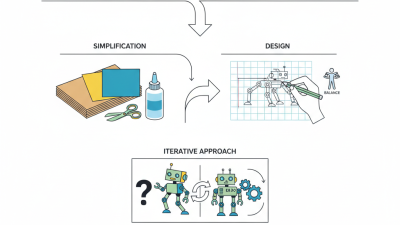
Top 4 Legged Walking Robot Manufacturers Worldwide
The leading legged robot manufacturers should be judged by evidence, not polished demonstrations. Reliable companies publish load limits, walking speeds, battery duration, and operating temperatures. Their robots should cross gravel, wet floors, stairs, and uneven industrial paths with stable movement. Field experience matters. A machine that performs well in a laboratory may struggle beside dust, cables, or poor lighting.
Evaluate engineering depth through sensors, control software, actuator design, and obstacle recovery. Check whether the robot maintains balance after a light push or a sudden surface change. Manufacturers should provide test records, maintenance schedules, safety procedures, and transparent limitations. Independent trials and customer feedback strengthen credibility. Service response also matters, especially when replacement parts affect production time. A strong warranty helps, but it cannot replace dependable technical support.
Tips: Request a live demonstration on your terrain. Ask for raw test data, not only edited videos. Compare repeatability across several trials. Inspect joint noise, heat buildup, charging time, and emergency-stop access. No scorecard is perfect. My own evaluation would still leave room for doubt, because long-term reliability often appears after months, not minutes.
| Evaluation Criterion | What Should Be Evaluated | Objective Measurement | Recommended Benchmark | Evidence to Request | Suggested Weight |
|---|---|---|---|---|---|
| Locomotion Capability | Ability to walk, trot, climb, recover from disturbances, and operate on uneven terrain. | Walking speed, slope angle, obstacle height, step clearance, and recovery success rate. | Demonstrated operation on mixed indoor and outdoor surfaces with repeatable test results. | Standardized videos, test procedures, terrain specifications, and field-test records. | 18% |
| Payload and Mobility Balance | Useful payload capacity without unacceptable loss of speed, stability, or endurance. | Payload-to-total-mass ratio, speed under payload, center-of-mass tolerance, and stability margin. | Payload figures must be stated together with operating speed, terrain, and duty-cycle conditions. | Independent load-test reports, technical datasheets, and payload test configurations. | 14% |
| Battery Endurance | Continuous operating time under realistic movement, sensing, communication, and payload loads. | Runtime in hours, distance per charge, battery capacity in watt-hours, and recharge time. | Runtime should be reported using a defined duty cycle rather than an unloaded laboratory estimate. | Battery specifications, duty-cycle methodology, thermal conditions, and cycle-life data. | 14% |
| Perception and Autonomy | Quality of mapping, obstacle detection, localization, navigation, and human-safe interaction. | Navigation success rate, localization error, obstacle-detection range, latency, and manual intervention frequency. | Reliable operation in changing lighting, cluttered environments, and partially obstructed paths. | Sensor list, software documentation, autonomy demonstrations, and failure-recovery logs. | 14% |
| Safety and Functional Reliability | Protection against falls, unexpected motion, loss of communication, overheating, and component faults. | Emergency-stop response, fault-detection coverage, ingress protection, operating-temperature range, and mean time between failures. | Documented risk controls, safe shutdown behavior, and repeatable operation during extended testing. | Safety case, risk assessment, fault logs, environmental test results, and maintenance records. | 14% |
| Software and Integration | Compatibility with robotics middleware, APIs, payload interfaces, remote operation, and data systems. | Supported communication protocols, API availability, sensor interfaces, update process, and integration time. | Well-documented interfaces with secure remote access and clear version-control practices. | API documentation, SDK access, interface specifications, cybersecurity policy, and integration examples. | 10% |
| Manufacturing Quality and Support | Production maturity, component consistency, repairability, spare-parts availability, and technical support. | Production volume, warranty terms, response time, spare-parts lead time, and service coverage. | Transparent warranty conditions and support resources available throughout the intended deployment region. | Quality certifications, warranty documents, service-level agreements, and customer-reference checks. | 8% |
| Total Cost of Ownership | Full lifecycle cost, including acquisition, batteries, software, training, maintenance, and downtime. | Five-year cost model, cost per operating hour, annual maintenance cost, and energy consumption. | Comparison should use the same mission profile, utilization rate, staffing assumptions, and service period. | Itemized quotation, licensing terms, maintenance schedule, energy data, and replacement-part pricing. | 8% |
Legged walking robots are moving from research laboratories into inspections, public infrastructure, and industrial sites. A leading Massachusetts robotics developer has shaped this transition through advanced mobility and practical field testing. Its four-legged platform can climb stairs, cross uneven concrete, and carry cameras through narrow plant corridors. Operators can guide it remotely, then review thermal images, acoustic readings, and three-dimensional maps. That matters when floors are wet, crowded, or unsafe for people.
The International Federation of Robotics reported nearly 205,000 professional service robots sold worldwide in 2023, representing approximately 30% annual growth. This figure includes several robot categories, not only legged systems. Interact Analysis also identifies mobile robotics as a strong automation segment, driven by logistics and industrial inspection demand. These reports support the market direction, but they do not prove every walking robot is commercially ready.
Field experience exposes harder questions. Battery endurance remains limited during repeated stair climbs. Outdoor perception can weaken in rain, glare, or loose gravel. A reliable deployment needs safety training, maintenance records, cybersecurity controls, and measurable return on investment. The developer’s engineering strength is clear, yet demonstrations can hide operational friction. A robot that walks beautifully for twenty minutes may still disappoint during an eight-hour shift. Independent testing should therefore examine recovery after falls, sensor accuracy, emergency stopping, and performance across seasons. That evidence is still uneven.
The global quadruped robot market includes four major development approaches: research platforms, industrial inspection systems, education kits, and affordable consumer-grade machines. Accessible development is changing the field. Smaller teams can now test walking control, mapping, and human-robot interaction without building every component from scratch.
A practical quadruped platform usually combines brushless actuators, an onboard computer, depth cameras, and an inertial measurement unit. These parts help the robot balance on concrete, carpet, and uneven paving. An open software development kit can shorten testing time. Developers may adjust gait timing, joint limits, or sensor behavior from a laptop. That matters in classrooms, laboratories, and early commercial prototypes.
Hands-on testing still exposes weaknesses. A robot may walk smoothly indoors but hesitate near stairs or loose gravel. Battery weight affects speed, while poor calibration creates noisy foot placement. I have found that simple logging is more valuable than impressive demonstrations. Record motor temperature, battery voltage, slip events, and recovery time. Small datasets reveal patterns that videos hide. Progress is not always elegant.
Affordable hardware also lowers the entry barrier for universities and independent engineers. Students can study locomotion with real sensors instead of relying only on simulation. However, accessible does not mean effortless. Safe speed limits, emergency stops, protective covers, and supervised testing remain essential. Documentation can be incomplete. Some interfaces feel rushed. That imperfection encourages careful validation before deployment in public or industrial spaces.
Top 4 Legged Walking Robot Manufacturers Worldwide: Industrial and Defense Applications
Four leading quadruped robot manufacturers are reshaping inspection, security, and remote operations. Their machines climb stairs, cross gravel, and carry cameras through narrow industrial spaces. In factories, teams use them to inspect pipelines, substations, storage areas, and construction sites. The International Federation of Robotics reported 541,302 industrial robot installations worldwide in 2023. Quadruped platforms remain a small niche, but they extend automation beyond smooth factory floors.
Defense users value mobility and distance from hazardous environments. These robots can support perimeter observation, terrain mapping, equipment checks, and logistics training without placing personnel at the front of a task. The U.S. Government Accountability Office has highlighted growing experimentation with unmanned systems for reducing operational risk. However, autonomy still has limits. Dust, rain, poor lighting, and unstable ground can reduce reliability. Human supervision remains essential.
Market figures need careful reading. Industry reports often combine quadrupeds with broader mobile-robot categories, making direct comparisons imperfect. MarketsandMarkets projected strong growth for mobile robots through the decade, yet deployment costs, battery endurance, and maintenance remain practical barriers. A robot may walk impressively during a demonstration, then struggle after hours of vibration and heat. That gap matters. Manufacturers should publish field-service data, failure rates, and training requirements, not only polished videos. Real industrial value comes from repeatable performance, clear safety controls, and measurable labor savings.
Global industrial robot installations provide a measurable indicator of the broader automation environment in which quadruped robots are being adopted for inspection, remote monitoring, logistics, and defense-related missions.
The figures are rounded annual installation totals reported in World Robotics industry statistics. They describe the wider industrial robotics market and are not quadruped-robot sales figures.