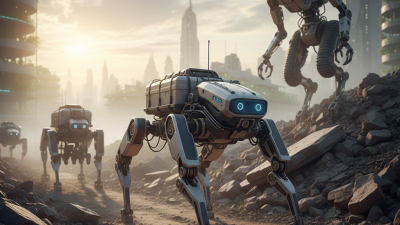
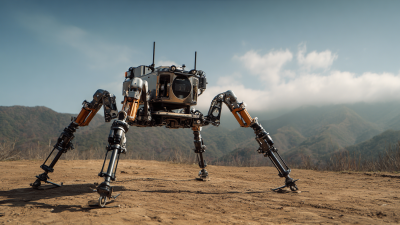
Choosing a passive walking robot can help global buyers explore safer, simpler, and more energy-conscious mobility solutions. Unlike powered systems, it uses mechanical design, gravity, and controlled body movement to support walking patterns. This can reduce battery dependence and simplify daily operation.
For buyers, the decision should begin with practical evidence. Examine gait stability, frame strength, user adjustment, maintenance access, and training requirements. A well-designed passive walking robot should feel balanced on level flooring, with smooth joints and secure support points. Product demonstrations, technical drawings, inspection records, and user feedback can reveal more than attractive marketing images. Experienced distributors should also explain spare-part availability, delivery conditions, installation support, and after-sales service.
However, passive does not mean effortless. Some users may need physical assistance, supervised training, or additional support during early use. Performance can vary with body size, walking ability, floor conditions, and product configuration. This point is easy to overlook. Global buyers should request clear specifications and verify whether the equipment fits their intended environment. Independent testing or advice from qualified rehabilitation professionals may strengthen the purchasing decision. Local import, safety, and product-use requirements should also be checked before ordering.
The strongest choice is not always the most advanced model. It is the model that matches real users, realistic budgets, and available support. Careful evaluation builds trust and reduces avoidable costs. A passive walking robot may offer meaningful value, but only when its design, limitations, and service network are understood clearly.
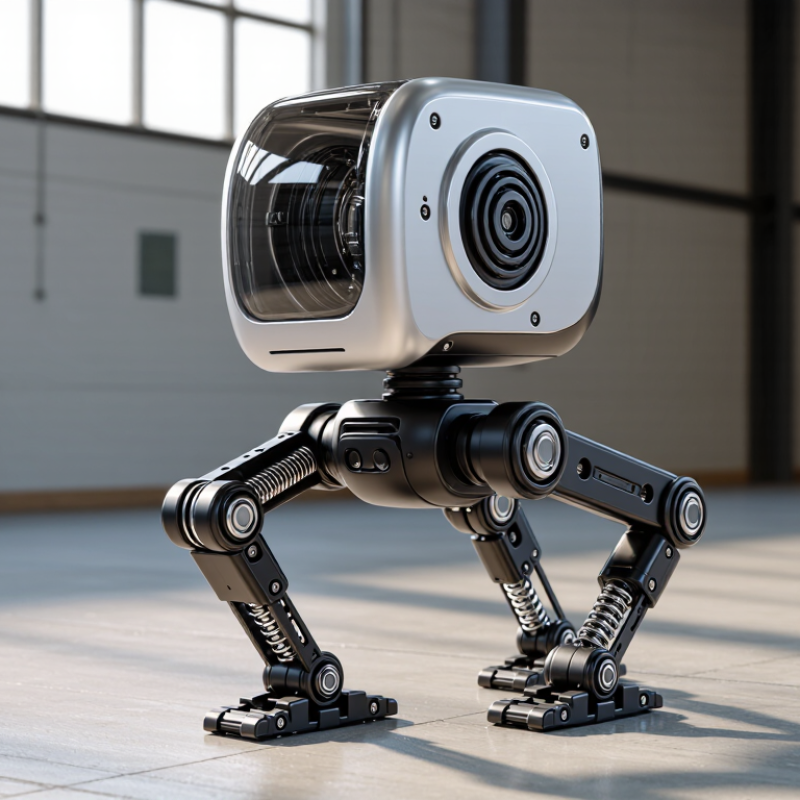
A passive walking robot is a machine designed to walk with limited or no motor-driven movement. Its legs use gravity, joint alignment, and carefully balanced geometry. On a gentle slope, each step can flow from the previous one. The robot does not need powerful actuators to lift every foot. That makes its structure simpler and its energy demand lower than many powered walking systems.
The key parts include lightweight legs, low-friction joints, adjustable feet, and a stable frame. Some models use a treadmill or controlled ramp during testing. Others add sensors to measure balance, stride length, and joint motion. It is not a self-driving machine. Without the right surface and setup, it may stop, wobble, or fall. That limitation matters for global buyers comparing real operating conditions.
In practical evaluations, engineers usually check foot clearance, joint wear, walking stability, and recovery after a small disturbance. A smooth laboratory floor may produce excellent results, while uneven flooring exposes weaknesses quickly. Buyers should also review maintenance access, safety guarding, training needs, and local equipment requirements. Passive designs can support robotics education, mechanical research, and controlled mobility studies. They may reduce operating costs, but they are not automatically maintenance-free. Our early assumption that simpler mechanics mean easier deployment can be wrong. Careful testing remains essential.
The figures below describe common characteristics of passive-dynamic or quasi-passive walking robots. Actual performance depends on leg geometry, load, terrain, control system, and test conditions.
| Data Dimension | Typical Information | Why It Matters to Global Buyers | Key Purchasing Consideration |
|---|---|---|---|
| Definition | A passive walking robot uses gravity, mechanical design, and body momentum to support part of its walking motion, reducing the need for continuous motor-driven control. | Its mechanically assisted gait can simplify the walking mechanism and reduce dependence on complex software. | Confirm whether the product is fully passive, quasi-passive, or motor-assisted. |
| Energy Requirement | Passive-dynamic systems can walk downhill or on a slight incline without continuous external power. Quasi-passive systems normally use limited actuator power. | Lower operating energy may support longer demonstrations, educational use, and battery-powered applications. | Request measured energy consumption under a clearly defined load and terrain condition. |
| Mechanical Structure | Common elements include articulated legs, compliant joints, low-friction pivots, lightweight links, and carefully balanced mass distribution. | A simpler mechanical architecture can make inspection, servicing, and operator training easier. | Evaluate joint durability, bearing quality, spare-part availability, and assembly requirements. |
| Walking Environment | Traditional passive-dynamic walkers perform best on smooth, predictable surfaces and may require a controlled slope or level platform. | This makes them suitable for laboratories, classrooms, exhibitions, and controlled research environments. | Check performance on flat ground, ramps, uneven surfaces, and the specific floor materials used at the destination. |
| Control Complexity | A fully passive walker may require little or no active gait control, while a quasi-passive model may use sensors, small actuators, or basic feedback control. | Reduced control complexity can lower integration effort and shorten commissioning time. | Clarify software requirements, communication interfaces, firmware access, and control documentation. |
| Walking Speed | Walking speed is generally lower and more condition-dependent than that of powered industrial mobile robots; it varies with leg geometry, slope, and gait design. | The slower motion can improve visibility during teaching, demonstrations, and gait analysis. | Compare measured speed using the same surface, payload, incline, and test method. |
| Payload Capacity | Payload is often limited because passive walking depends on precise mass distribution, balance, and low mechanical resistance. | Understanding the payload limit helps prevent unstable gait behavior and premature mechanical wear. | Ask for payload data that includes batteries, sensors, accessories, and any mounted educational equipment. |
| Safety Profile | Lower actuator power can reduce certain pinch, collision, and runaway-motion risks, but moving joints still require guarding and safe operating procedures. | A comparatively low-energy platform may be easier to use in classrooms and public demonstration areas. | Review emergency-stop provisions, mechanical stops, protective covers, and applicable local safety requirements. |
| Maintenance Needs | Routine maintenance commonly includes checking fasteners, joints, bearings, feet, structural connections, and any limited actuator or sensor system. | Straightforward maintenance can reduce downtime for international users who need practical servicing procedures. | Confirm maintenance intervals, lubrication requirements, troubleshooting instructions, and replacement-part lead times. |
| Typical Applications | Common applications include robotics education, gait research, biomechanics demonstrations, mechanical design studies, and proof-of-concept development. | The platform can provide a clear way to study locomotion without the cost and complexity of a fully powered humanoid robot. | Match the robot’s sensors, dimensions, and data output to the intended research or training curriculum. |
| Global Logistics | A compact, lightweight design may be easier to package and transport than a large powered robot, although packaging needs depend on the assembled size and fragility of the joints. | Smaller shipping volume can simplify international transport, storage, and installation planning. | Verify packed dimensions, gross weight, export documentation, installation steps, and destination-country requirements. |
| Best-Fit Buyer | Best suited to buyers prioritizing mechanical simplicity, energy efficiency, educational value, and controlled walking experiments over high-speed autonomy. | It can offer a focused and cost-conscious entry point for studying legged locomotion. | Choose a powered walking platform instead if the project requires high payload, rough-terrain mobility, or autonomous navigation. |