Choosing dinosaur outdoor decorations for wholesale requires more than selecting the largest model in a catalog. Buyers must balance scientific appearance, weather resistance, safety, shipping efficiency, and customer appeal. A Tyrannosaurus with sharply painted teeth may attract attention, but weak joints or fading skin can quickly damage a retailer’s reputation. The best products should look convincing beside garden paths, playgrounds, museums, resorts, and commercial entrances.
Paleontologist Dr. David Hone often emphasizes that accurate dinosaur interpretation should remain clear and evidence-based. That principle matters here. Dinosaur Outdoor Decorations should reflect recognizable anatomy, believable posture, and age-appropriate presentation. A supplier who explains design references, material thickness, paint systems, and maintenance needs demonstrates stronger expertise. Buyers should request close-up photos, production samples, load details, and packaging measurements before placing large orders.
Think practically. Can two workers install the model safely? Will rain collect inside the body? Are replacement parts available? These questions expose quality differences. Still, no wholesale decision is perfect. A scientifically accurate model may sell slowly in a highly playful market. A bright cartoon design may perform better with families, despite limited realism. That tension deserves honest review. Reliable suppliers can offer several styles, custom colors, stable bases, and clear lead times. They should also provide reasonable quality inspections and documented safety guidance.
This guide introduces the major purchasing factors. It examines design accuracy, outdoor materials, customization, logistics, pricing, and long-term value. The goal is simple: help wholesale buyers choose decorations that remain attractive, durable, and commercially useful. The largest dinosaur is not always the best investment.
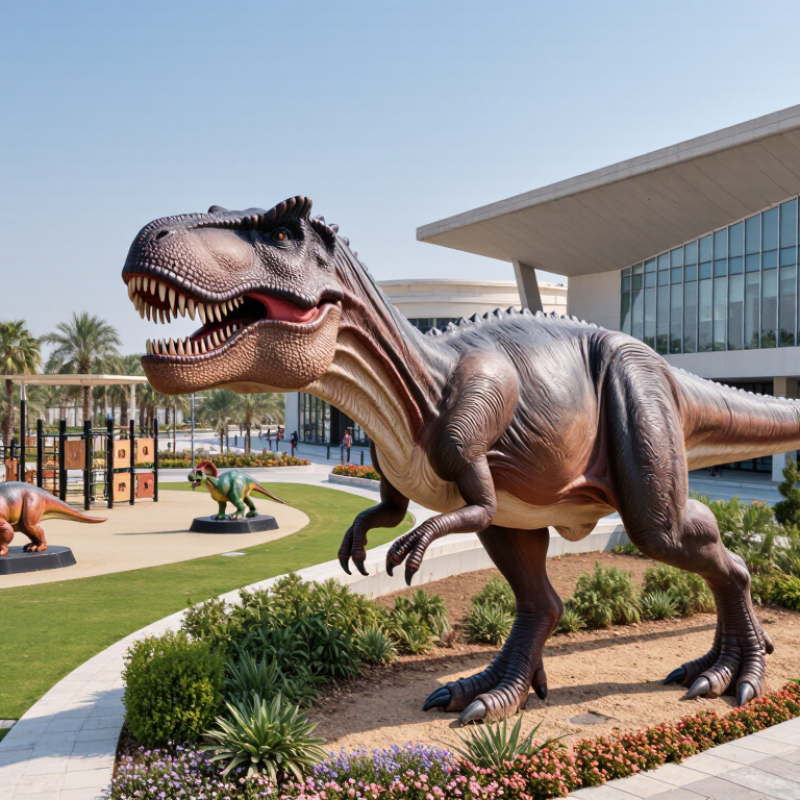
Wholesale buyers should classify dinosaur outdoor decorations by function, material, and visitor contact.
Fiberglass dinosaurs suit permanent gardens because they provide strong visual impact and resist repeated handling. Inflatable dinosaurs are lighter and easier to store, but they need stable anchoring and regular air-pressure checks.
Metal silhouettes work well along paths, while resin eggs and footprint panels create smaller discovery points.
Scale also changes the buying decision. The 2024 Grand View Research outdoor furniture report valued the global market at about USD 23.6 billion in 2023, showing continued demand for outdoor leisure spaces.
This figure does not measure dinosaur décor directly. Still, it signals a wider market for durable outdoor experiences.
Large specimens attract attention from a distance. Smaller pieces support photo zones and children’s activity areas. Keep both types.
Weather resistance needs evidence, not attractive catalog language. Ask for UV testing, coating details, drainage design, and repair instructions.
The Themed Entertainment Association’s 2023 Theme Index reported roughly 243 million visits across the world’s top 25 theme parks. High foot traffic makes sharp edges, unstable bases, and fading surfaces serious concerns.
Not every decoration needs to be enormous. That assumption is too simple. A smaller, well-anchored dinosaur may perform better beside a crowded walkway.
For wholesale orders, request sample inspection, packaging dimensions, replacement-part availability, and documented load limits before selecting quantities.
Wholesale buyers rarely need the same dinosaur products. Their display settings shape every purchasing decision. A garden center may want medium-sized dinosaurs beside tropical plants. A family attraction may need larger figures near entrances and walking paths. Seasonal event suppliers often prefer lightweight products for quicker setup. Ask about customer age, available space, budget, order quantity, and expected display duration. These details reveal whether buyers need realistic models, colorful designs, or simple promotional pieces.
Outdoor placement requires practical evaluation. Measure the display area before choosing dinosaur sizes. Check walking routes, sightlines, ground conditions, and nearby lighting. Figures should offer stable bases and weather-resistant surfaces. Smooth edges and secure components also matter, especially in public spaces. Packaging deserves attention too. Buyers may need compact cartons, clear assembly instructions, and replacement parts. A product can look impressive in a catalog but perform poorly in a crowded display. That difference is easy to miss.
Tips: Compare the dinosaur’s height with nearby signs and plants. Leave enough space for visitors to move safely. Request sample photos in outdoor settings. Review color changes after prolonged sunlight. Confirm carton dimensions before quoting shipping costs. One common mistake is choosing the largest figure available. It may attract attention, but it can overwhelm a small venue. Smaller dinosaurs sometimes create a more natural scene. The best plan is not always the most dramatic one. Recheck the layout after installation, because real spaces often look different from drawings.
How to Choose Dinosaur Outdoor Decorations for Wholesale?
Material selection affects appearance, shipping cost, and product life. Fiberglass offers sharp scales and strong color retention, but it can crack after severe impact. Rotomolded polyethylene is lighter, flexible, and easier to clean. Steel frames improve stability, yet exposed metal may rust near coastal sites. Ask suppliers for UV-resistance tests, coating details, drainage design, and replacement-part availability. Do not trust “weatherproof” alone. It is too vague.
Size should match the venue, viewing distance, and delivery route. A three-meter dinosaur can attract attention, but it may require reinforced anchoring and special unloading equipment. Grand View Research’s 2024 outdoor furniture report forecasts roughly 5% annual market growth, reflecting stronger demand for durable outdoor products. That trend does not justify oversized designs everywhere. Measure twice. Small entrances often punish ambitious orders.
Design quality should support recognition without creating hazards. Rounded claws, concealed fasteners, stable feet, and non-toxic exterior coatings are practical details. The U.S. Consumer Product Safety Commission’s 2023 injury data reports more than 200,000 emergency-department visits linked to playground equipment annually. Dinosaur decorations are not playground equipment, but buyers should still avoid climbable edges, pinch points, tipping risks, and loose accessories. For inflatable models, review anchoring, blower protection, and fire-performance documentation against applicable standards such as ASTM F2374. I have seen buyers focus on dramatic teeth and forget wind loads. That mistake is expensive. Safety reviews should involve the venue operator, not only the factory.
| Material Type | Typical Dinosaur Size | Approximate Weight Range | Outdoor Performance | Design and Finish Options | Recommended Safety Features | Best Wholesale Use |
|---|---|---|---|---|---|---|
| Fiberglass-reinforced plastic (FRP) | 1.2–4.5 m long 0.8–2.5 m high | 25–180 kg, depending on size, wall thickness, and internal frame | Good resistance to rain and humidity when sealed and coated; UV-resistant topcoat is recommended for long-term color retention. | Detailed scales, teeth, claws, textured skin, custom colors, gloss or matte finishes. | Rounded or softened edges; enclosed metal frame; weighted base or ground anchors; weatherproof coating; concealed fasteners. | Theme parks, shopping centers, museums, event displays, and entrance features. |
| Rotomolded HDPE | 0.8–3.0 m long 0.5–1.8 m high | 10–75 kg | Resistant to moisture, impact, and many common outdoor chemicals; UV-stabilized resin helps reduce fading and brittleness. | Bright molded colors, smooth low-maintenance surfaces, simple cartoon or educational dinosaur forms. | Rounded molded edges; stable wide base; anti-tip anchoring; non-toxic exterior coating where applicable; no exposed sharp hardware. | Family attractions, playground surroundings, retail promotions, and temporary outdoor installations. |
| Stainless steel | 1.0–5.0 m long 0.8–3.0 m high | 40–350 kg, depending on tube, sheet, and frame construction | Excellent structural durability; 304 stainless steel is common for general outdoor use, while 316 is better suited to coastal or salt-exposed locations. | Polished, brushed, painted, perforated, or abstract skeletal designs; suitable for modern architectural settings. | Deburred and rounded metal edges; sealed welds; tamper-resistant bolts; engineered base plate; corrosion-resistant anchors. | Permanent public art, commercial plazas, resorts, zoos, and high-traffic outdoor areas. |
| Steel frame with fiberglass or resin skin | 2.0–8.0 m long 1.5–4.5 m high | 120–900 kg | Suitable for large permanent displays when the frame is corrosion-protected and the exterior shell is properly sealed. | Life-size or oversized realistic designs; open-mouth poses, articulated-looking forms, and integrated scenic elements. | Professional structural review; engineered anchoring; locked access panels; protected welds; rounded public-contact areas; wind-load assessment. | Large attractions, dinosaur exhibitions, destination resorts, and permanent landmark displays. |
| EVA or PU foam with protective coating | 1.0–4.0 m long 0.7–2.3 m high | 8–80 kg | Lightweight and easy to transport; requires a durable elastomeric or resin coating and regular inspection for cuts, peeling, and water ingress. | Highly sculpted surfaces, lightweight promotional figures, movable poses, and seasonal color themes. | Use only with a stable internal frame and ballast or anchors; protect from vandalism; inspect coating and joints frequently. | Short-term campaigns, indoor-outdoor events, seasonal displays, and low-load promotional installations. |
Choosing dinosaur outdoor decorations for wholesale requires more than comparing catalog photos. Supplier reliability matters just as much as appearance. Request factory photos, material specifications, production capacity, and recent quality records. A professional supplier should explain fiberglass thickness, paint performance, packaging methods, and outdoor durability clearly. Ask for a sample before placing a large order. Small cracks or uneven colors often appear only after delivery.
Customization can make a display more memorable, but every change affects cost and timing. Confirm dinosaur size, posture, colors, textures, lighting, logos, and mounting systems in a written drawing. Check whether the supplier provides 3D previews and revision limits. I once underestimated packaging space for a large model, which increased shipping costs. That mistake taught me to review dimensions, crate weight, and installation needs early.
Pricing should include tooling, samples, customization, packaging, shipping, taxes, and possible replacement parts. Compare the landed cost, not only the unit price. A low quote may hide weak coatings or thin materials. Lead time also deserves attention. Weather delays and production revisions can affect seasonal sales.
Tips:
Use a supplier checklist. Verify payment terms and inspection stages. Ask for a clear warranty policy. Compare at least three written quotations. Keep a small budget for unexpected adjustments. Wholesale planning is rarely perfect, so leave room for practical corrections.
Choosing dinosaur outdoor decorations for wholesale requires more than comparing shapes and prices. Size, weight, packaging, and destination access can change the real cost. Measure loading doors, elevators, and display areas before ordering. A large dinosaur may look impressive, but narrow streets can make delivery difficult. Request clear packing details, assembly drawings, material specifications, and estimated shipping times.
Tips: Confirm crate dimensions, lifting points, installation tools, and spare parts before payment. Leave space for safe visitor movement and routine inspections.
Installation should match the site surface and local weather conditions. Secure outdoor figures with suitable anchors, especially in windy areas. Check electrical components and waterproof connections when the decoration includes lighting or movement. A practical installation team should record bolt positions and keep replacement hardware labeled. Plans sometimes fail. A small access problem can delay the entire display.
Maintenance affects both appearance and resale value. Inspect joints, paint, cables, and foundation points every few weeks during busy seasons. Clean dust and bird residue with mild products, not aggressive chemicals. Keep service records with photos and repair dates. Buyers often trust documented care more than polished sales language. For resale, choose neutral colors, modular parts, and designs that can fit parks, events, or educational venues. However, resale demand is never guaranteed. Estimate storage costs honestly before purchasing large quantities.